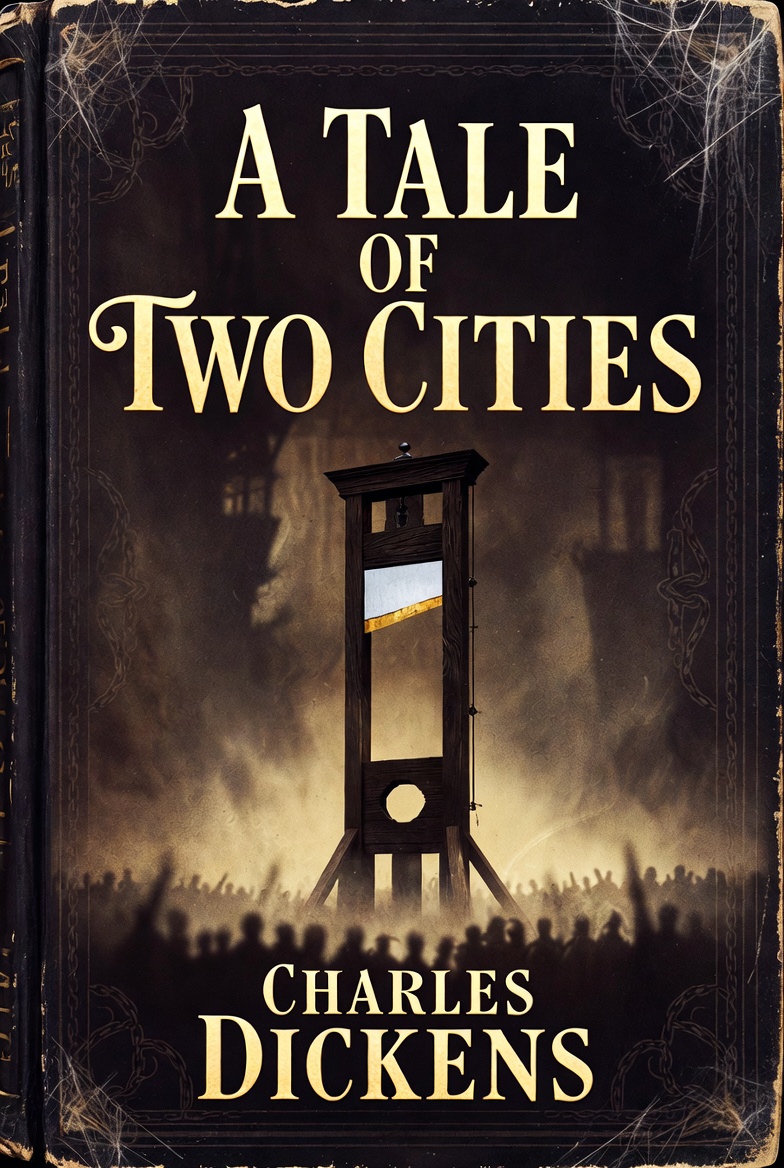
Charles Dickens’s A Tale of Two Cities tells a sweeping story of justice, redemption, and human struggle in 18th-century London and Paris. Centered on Charles Darnay, a French aristocrat seeking a new life, and his relentless foil, a cynical English lawyer named Sydney Carton, the novel explores poverty, sacrifice, and moral courage. Through unforgettable characters and vivid social commentary, Dickens examines compassion, justice, and the enduring human spirit, creating a timeless masterpiece about resilience, hope, and the fight for dignity.
Date: 1859 (United Kingdom)
Length: ~448 pages (varies by edition)
Cultural impact: ~200.000.000 copies (estimates)
Genre: Historical Fiction, Drama & Plays
"It has everything: dark deeds, revolution, madness, love, thwarted love, forgiveness, revenge, and a stunning act of self-sacrifice" — MouthShut Literary Reviews, online consumer book review community
"The best historical novel I've ever read... Add Dickens's unique skills of characterization and a satisfyingly intricate plot and the result is that rare nineteenth century work that even the jaded modern reader can't put down" — H.W. Brands, prominent American historian, academic, and bestselling author
"Dickens lived in London. In his book A Tale of Two Cities, based on the French Revolution, we see that he really could not write a tale of two cities. He was a resident of just one city: London" — Jorge Luis Borges, world-renowned Argentine short-story writer, essayist, and pioneer of magical realism
"He wrote a book about two cities, one of which he understood; the other he did not understand. And his description of the city he did not know is almost better than his description of the city he did know" — G.K. Chesterton, influential English writer, philosopher, and literary critic
"A lesson on what happens when injustice is allowed to fester, and when the explosion leads to horrible excess" — L.L. Barkat, contemporary poet, author, and managing editor of TweetSpeak Poetry
"A gothic representation of abuses of legal power... Dickens takes the demonization of the law to a murderous level in Tale of Two Cities, making his attack on Chancery in Bleak House pale by comparison" — Peter Ackroyd, acclaimed English biographer, novelist, and chief literary critic for The Times
Be the first to review this book!
*As an Amazon Associate we earn from qualifying purchases.